
Showing posts with label cicerone exam. Show all posts
Showing posts with label cicerone exam. Show all posts
March 1, 2012
Book Review: The Brewmasters Table
In preparing for the cicerone exam I have been doing some reading on food and beer pairings. Recently I read The Brewmasters Table by Garrett Oliver, it's the best book I have found yet on food and beer pairings.
 The book is arranged into three parts; The basics (includes a definition of beer, a brief history of beer and the principals of matching beer with food), Brewing traditions (covers everything from lambic to british ales to the american craft beers), and the last word (covers glassware, temperature, storage and service as well as a reference chart). The second part of the book makes up most of the reading going in depth into every beer styles history, flavors and how to pair the beer.
This book took me awhile to read, it seems like more of a reference book. It follows the same format for each beer and it took me a long time to get through because I kept putting it down and not coming back to it. Still, it gave me a really good base on which to start experimenting with my own pairings and be pretty successful right away. Unlike Tasting Beer by Randy Mosher The Brewmasters Table does not cover how to taste and judge beer but rather tells you the facts you need to know (i.e. flavors) you need to know to pair just about any beer you may come across making it a great for quick reference.
I would recommend it for a book to keep handy for research on specific styles and/or pairings but nor for a book to sit down and read every night. Additionally it's a good study guide for the cicerone exam for the pairing information (the part I'm having the most trouble with) and a good guide for the BJCP exam for all the style information and history.
 The book is arranged into three parts; The basics (includes a definition of beer, a brief history of beer and the principals of matching beer with food), Brewing traditions (covers everything from lambic to british ales to the american craft beers), and the last word (covers glassware, temperature, storage and service as well as a reference chart). The second part of the book makes up most of the reading going in depth into every beer styles history, flavors and how to pair the beer.
This book took me awhile to read, it seems like more of a reference book. It follows the same format for each beer and it took me a long time to get through because I kept putting it down and not coming back to it. Still, it gave me a really good base on which to start experimenting with my own pairings and be pretty successful right away. Unlike Tasting Beer by Randy Mosher The Brewmasters Table does not cover how to taste and judge beer but rather tells you the facts you need to know (i.e. flavors) you need to know to pair just about any beer you may come across making it a great for quick reference.
I would recommend it for a book to keep handy for research on specific styles and/or pairings but nor for a book to sit down and read every night. Additionally it's a good study guide for the cicerone exam for the pairing information (the part I'm having the most trouble with) and a good guide for the BJCP exam for all the style information and history.

October 2, 2011
Book Review: Tasting Beer- Randy Mosher
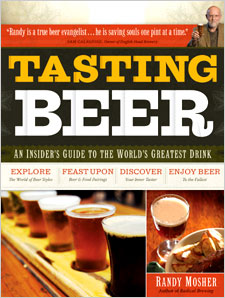
Tasting Beer was an enjoyable read The beginning follows the same pattern any beer book does it follows the history of beer in 20 or so pages going from the ancient Sumerians & ancient Egyptians to the modern brewing industry, stopping to talk about porters in England along the way. Still Tasting Beer is more than just a general beer book.
The second chapter starts the tasting portion sensory evaluation, judging tips, presentation of beer, pairing beer with food. This is the portion of the book thats most useful. Tasting beer can be a difficult subject to broach in print but The book gives you a method to efficiently communicate whats going on in your glass and mouth. The book discusses some of the common flavors found in beers (intentional and off flavors) mouthfeel, carbonation, and how the brewing ingredients and process effect the final product. The book has several charts showing the differences in color, alcohol, and bitterness relative to styles.
The last half of the book is a discussion of styles. They are separated by country of origin and go briefly into the history of the given styles. This part was a bit tedious at times (reading about 15 styles and their original gravities/ IBU's can be boring at times) as it reads somewhat like a list.
Randy Mosher is part of the faculty at the sibel institute, he teaches courses in sensory panel management among otheres. He is a well respected author and lecturer in the beer world.
Overall i really enjoyed the book. I feel it started me on the road to really tasting and evaluating beer rather than just drinking it, however, reading a book is no substitute for experience when it comes to tasting and judging beer but thats the fun part. This book comes highly recommended
Subscribe to:
Posts (Atom)